

Materials define what engineering can achieve.
Inspired by Michael F. Ashby
High-Performance MMJ Materials
Qualified MMJ Material Portfolio
-
Oxide, Nitride & Carbide Ceramics
-
Sintered Glasses
-
Silicate Ceramics
-
Glass-Ceramics
-
Cemented Carbides & Cermets
-
Metals
-
Thermoplastic & Particle-Filled Polymers
Explore a broad range of validated ceramics, metals and functional materials ready for mono- and multi-material 3D printing.
Property-Driven Material Selection
From Requirements to Materials
-
Electrically Conductive ↔ Insulating
-
Thermally Insulating ↔ Conductive
-
Hard ↔ Ductile
-
Colour & Aesthetics
-
Looking for a specific property?
Select materials based on required properties. We recommend the optimal material or material combination.
BYOP - Bring Your Own Powder
Custom Material Development
-
Proprietary & NDA-Protected Materials
-
Almost Any Powder Material
-
Application-Specific Solutions
-
Fast Material Enablement
BYOP is exclusively available for Multi Material Jetting (MMJ) systems and intended for MMJ ProX Series customers as part of a feasibility study.
Customer-specific powders are rapidly qualified using protected MMJ binder technology and converted into stable, reproducible printing materials validated on MMJ ProX Series 3D printing systems.
Powder-Based Process Route
MMJ follows an established industrial method comparable to injection molding: fine powders combined with thermoplastic binders and high-performance additives enabling multifunctional, multi-material parts in one print.
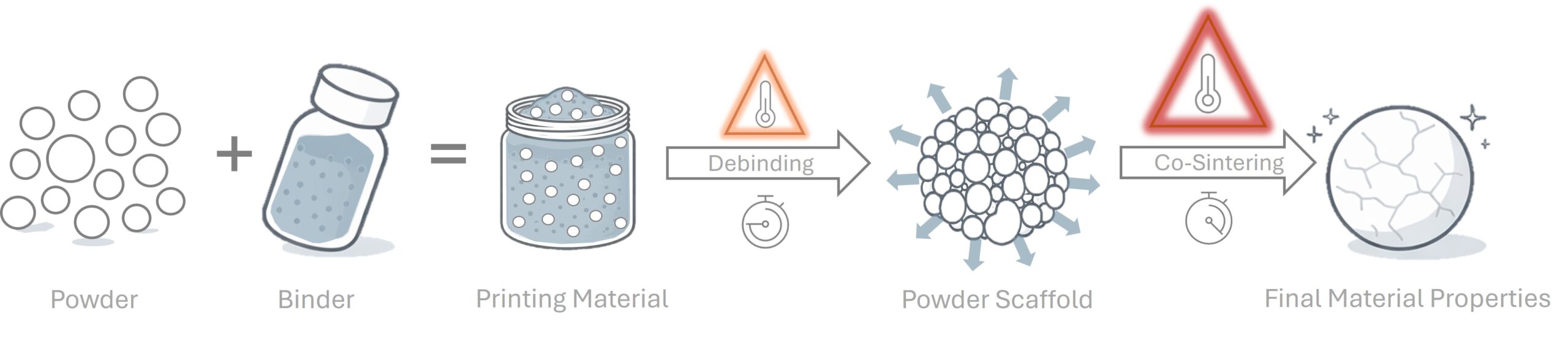
Leverage MMJ
Choose from a broad MMJ powder portfolio or use customized materials tailored to your needs.
Particle Size Flexibility
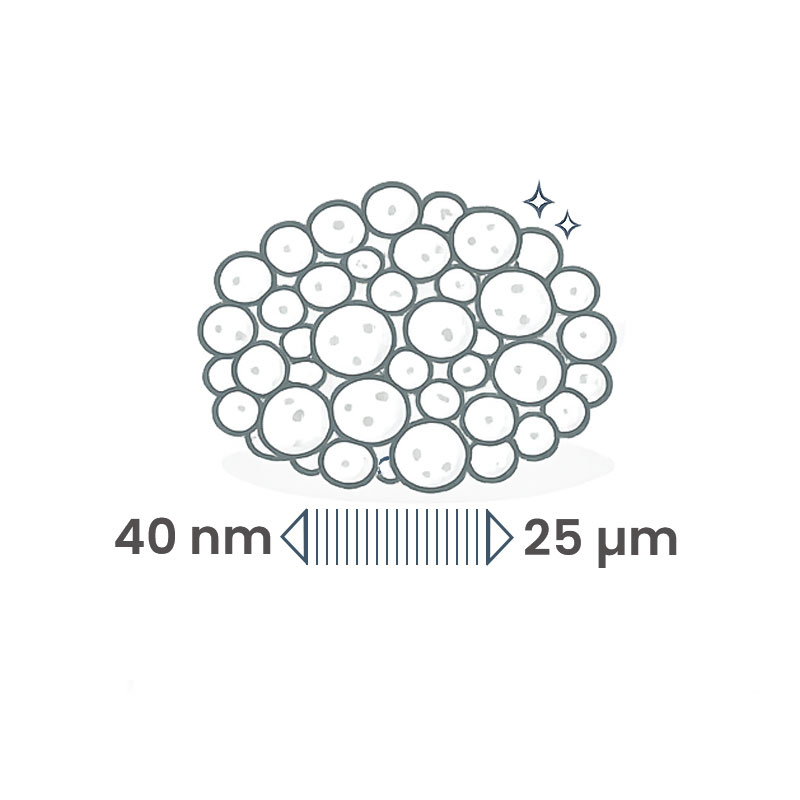
Supports powders from 40 nm to 25 µm, with even larger particles possible via adjusted nozzles.
Morphological Adaptability
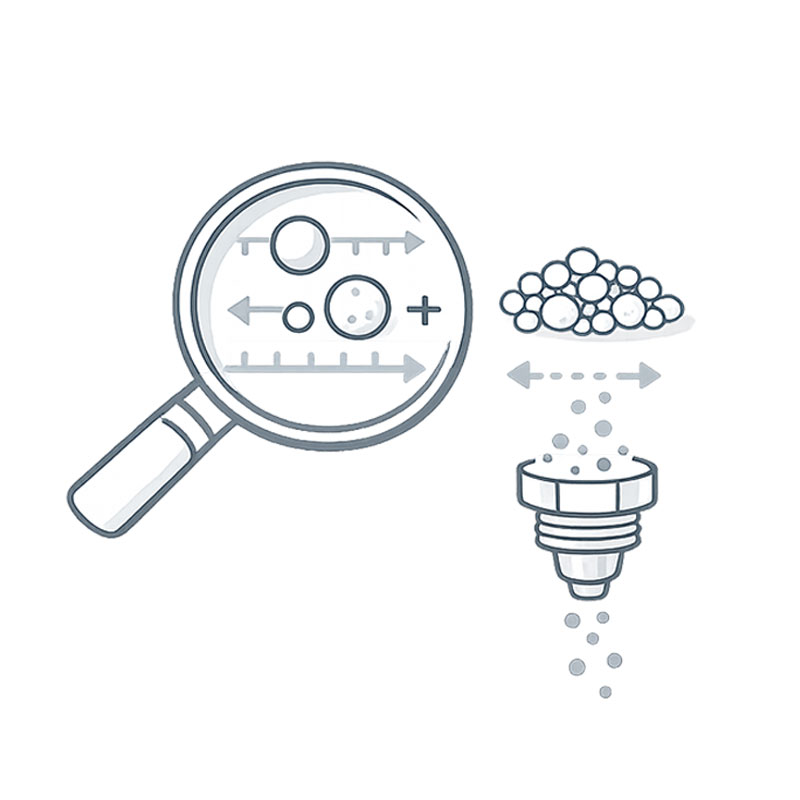
Compatible with powders of various shapes, from spherical to irregular.
Optical-Agnostic
Overcome the inherent limits of light-based processes such as SLA & VPP for broader material freedom.
High-performance materials. Powder-based. Multi-material capable.
Ceramics, metals, and polymer-based materials. Validated, printable, and thermally processed using MMJ.
- MMJ Portfolio Materials
- Oxide, Nitride & Carbide Ceramics
- Sintered Glasses
- Silicate Ceramics
- Glass-Ceramics
- Cemented Carbides & Cermets
- Metals
- Polymer-Based Materials
- Combine Material Properties

Oxide, nitride, and carbide ceramics are high-performance engineering ceramics used where metals and polymers reach their limits. They offer exceptional thermal stability, hardness, wear resistance, and chemical durability, with properties ranging from electrically insulating to thermally conductive. This material class enables tailored functional and structural performance, making it ideal for advanced mono- and multi-material applications.
Note
All listed ceramics can be processed within the MMJ material platform and can be supplied in customized feedstock formulations. Depending on the application, post-processing such as debinding and sintering is required to achieve the final ceramic performance.
- Alumina
- Alumina Toughened Zirconia
- Aluminum Nitride
- Nickel Oxid
- Silicon Carbide
- Sintered Silicon Carbide
- Silicon Carbide - Glass
- Silicon Nitride
- Silicon Nitride Molybdenum Disilicide
- Titanium Oxide
- Tungsten Carbide
- Yttrium Barium Copper Oxide
- Zirconia
- Zirconia Toughened Alumina
Alumina (Al₂O₃)
Alumina is a high-performance technical ceramic known for its excellent electrical insulation, chemical resistance, and wear stability. It is widely used in mechanical and electronic components operating under harsh conditions.
Typical applications: insulation parts, wear components, sealing elements, substrates.
Good to know: available in different purities and often in white to off-white appearance.
Alumina Toughened Zirconia (ATZ)
ATZ combines the hardness and chemical stability of alumina with the fracture toughness of zirconia. The result is a ceramic with improved mechanical reliability under dynamic or impact loads.
Typical applications: wear parts, high-load components, precision mechanical parts.
Good to know: offers a strong balance between strength and toughness compared to standard alumina.
Aluminum Nitride (AlN)
Aluminum Nitride is a high-performance ceramic characterized by outstanding thermal conductivity combined with electrical insulation. It is ideal for thermal management applications where heat dissipation is critical.
Typical applications: heat sinks, electronic substrates, semiconductor components.
Good to know: often used in high-tech electronics due to its thermal performance.
Nickel Oxide (NiO)
Nickel Oxide is a functional ceramic material mainly used for electrochemical and catalytic applications. It is relevant for advanced energy systems and high-temperature environments.
Typical applications: battery-related components, catalysts, functional coatings, sensors.
Good to know: primarily selected for its functional properties rather than structural strength.
Silicon Carbide (SiC)
Silicon Carbide is an extremely hard and wear-resistant ceramic with excellent thermal stability and chemical resistance. It is suitable for aggressive environments and high-temperature applications.
Typical applications: mechanical seals, heat exchangers, wear parts, high-temperature components.
Good to know: offers exceptional durability and is often chosen for extreme service conditions.
Sintered Silicon Carbide (SSiC)
Sintered Silicon Carbide (SSiC) is a high-performance structural ceramic known for its exceptional hardness, wear resistance, and thermal stability. Produced through solid-state sintering without a liquid phase, it provides high purity, excellent chemical resistance, and outstanding mechanical strength even at elevated temperatures.
Typical applications: mechanical seals, pump components, heat exchangers, high-temperature structural parts.
Good to know: Compared to conventional SiC materials, SSiC is produced by pressureless solid-state sintering without liquid-phase additives, resulting in high purity and minimal grain boundary phases. This microstructure provides excellent corrosion resistance, dimensional stability, and reliable performance at elevated temperatures, making SSiC particularly suitable for aggressive chemical and high-temperature environments.
Silicon Carbide - Glass
This composite combines SiC’s mechanical performance with improved processability through a glass phase. It can offer tailored thermal and mechanical behavior for specialized applications.
Typical applications: functional ceramic components, complex geometries, high-temperature parts.
Good to know: composite approach allows tuning of properties depending on application needs.
Silicon Nitride (Si₃N₄)
Silicon Nitride is a high-strength ceramic with excellent fracture toughness and thermal shock resistance. It is widely used for demanding mechanical applications requiring reliability under temperature changes.
Typical applications: bearings, turbine components, high-load mechanical parts.
Good to know: often preferred when both strength and thermal resistance are required.
Silicon Nitride – Molybdenum Disilicide (Si₃N₄–MoSi₂)
This advanced composite combines the mechanical strength of silicon nitride with the high-temperature performance of MoSi₂. It is suitable for functional and structural components exposed to extreme heat.
Typical applications: furnace components, high-temperature tooling, heating-related parts.
Good to know: particularly relevant for high-temperature engineering and thermal environments. We offering a electrically conductive and electrically insulating version of this material.
Titanium Oxide (TiO₂)
Titanium Oxide is a functional ceramic widely known for its chemical stability and optical properties. It is used in applications ranging from catalysts to advanced coatings and functional parts.
Typical applications: catalysts, sensors, functional ceramics, photocatalytic systems.
Good to know: often selected for its surface functionality rather than mechanical load capacity.
Tungsten Carbide (WC)
Tungsten Carbide is a high-density, extremely wear-resistant material used for severe mechanical abrasion and cutting environments. It is one of the most important materials for industrial tooling.
Typical applications: cutting tools, wear plates, nozzles, drilling components.
Good to know: known for its outstanding hardness and long lifetime in abrasive environments.
Yttrium Barium Copper Oxide (YBCO)
YBCO is a functional ceramic best known as a high-temperature superconducting material. It is used in advanced research and high-tech applications requiring superconductivity.
Typical applications: superconducting components, research systems, magnetic and power technologies.
Good to know: mainly relevant for specialized R&D and highly advanced functional applications.
Zirconia (ZrO₂)
Zirconia is a high-performance ceramic known for its high fracture toughness, wear resistance, and excellent surface quality. It is often used for precision parts and applications requiring mechanical reliability.
Typical applications: medical and dental parts, wear components, structural ceramics.
Good to know: available in different colors (e.g., white, black, blue, green, orange, and shaded variants), making it attractive for aesthetic and functional applications.
Zirconia Toughened Alumina (ZTA)
ZTA is an alumina-based ceramic reinforced with zirconia to improve toughness and crack resistance. It offers high hardness combined with improved reliability under mechanical stress.
Typical applications: wear parts, high-load components, industrial mechanical parts.
Good to know: often selected as a cost-effective alternative to full zirconia while maintaining high performance.
Sintered glasses are glass-based materials processed from fine powders to achieve defined shapes and functional properties. They combine chemical stability, electrical insulation, and optical functionality, with tunable density and microstructure. This makes them well suited for functional components, optical applications, and multi-material integration in advanced MMJ parts.
Note
All listed materials can be processed within the MMJ material platform as customized thermoplastic feedstocks. Final material performance is achieved through application-specific thermal post-processing.
Borosilicate Glass
Borosilicate Glass is known for its high thermal shock resistance and chemical durability. It performs reliably in environments with rapid temperature changes.
Typical applications: laboratory components, chemical equipment, optical and technical glass parts.
Good to know: transparent material with excellent resistance to thermal and chemical stress.
Lead Glass
Lead Glass is a specialty glass offering high density and specific optical and radiation-shielding properties. It is primarily used in functional and protective applications.
Typical applications: radiation shielding, optical components, specialty glass parts.
Good to know: selected for functional performance rather than mechanical strength; optical properties are a key driver.
Silicate ceramics are mineral-based ceramics commonly used for structural, electrical, and thermal applications. They offer good mechanical strength, thermal stability, and electrical insulation, while allowing controlled porosity and cost-effective processing. This makes them suitable for functional and structural components, as well as for integration in multi-material designs.
Note
All listed materials can be processed within the MMJ material platform as customized thermoplastic feedstocks. Final material performance is achieved through application-specific thermal post-processing.
Porcelain
Porcelain is a traditional ceramic material valued for its excellent electrical insulation, chemical stability, and smooth surface quality. It combines functional performance with a refined appearance.
Typical applications: electrical components, insulating parts, functional housings, precision ceramic parts.
Good to know: typically white or off-white; surface finish and translucency can vary depending on formulation and processing.
Glass-ceramics combine the properties of glasses and ceramics through controlled crystallization. Compared to traditional ceramics, they feature lower processing and firing temperatures, enabling excellent compatibility with noble metals such as gold, silver, and platinum. This makes them particularly well suited for electrical, electronic, and multi-material applications, where precise functional integration is required.
Note
All listed materials can be processed within the MMJ material platform as customized thermoplastic feedstocks. Final material performance is achieved through application-specific thermal post-processing.
LTCC (Low Temperature Co-fired Ceramic)
LTCC is a multilayer ceramic technology enabling the integration of electrical circuits and functional structures within ceramic substrates.
Typical applications: electronic modules, sensors, RF components, integrated ceramic circuits.
Good to know: enables compact designs with integrated electrical functionality.
Cemented carbides and cermets combine hard ceramic phases with metallic binders to achieve a balance of extreme hardness, wear resistance, and toughness. Their composite microstructure allows properties to be tailored for load-bearing and high-wear applications, while remaining compatible with multi-material integration. This makes them ideal for tooling, wear components, and functionally graded parts.
Note
All listed materials can be processed within the MMJ material platform as customized thermoplastic feedstocks. Final material performance is achieved through application-specific thermal post-processing.
Titanium Carbonitride (TiCN)
Titanium Carbonitride is a hard ceramic material combining wear resistance with improved toughness compared to pure carbides.
Typical applications: cutting tools, wear-resistant components, tooling inserts.
Good to know: often used where a balance of hardness and durability is required.
Tungsten Carbide – Cobalt (WC–Co)
WC–Co is a classic cemented carbide combining extreme hardness with improved toughness through a cobalt binder phase.
Typical applications: cutting tools, drilling components, wear parts, tooling.
Good to know: widely used in industrial tooling due to its proven performance in abrasive environments.
Tungsten Carbide – Nickel (WC–Ni)
WC–Ni offers similar wear resistance to WC–Co but with enhanced corrosion resistance, making it suitable for chemically aggressive environments.
Typical applications: wear parts, tooling for corrosive environments, industrial components.
Good to know: often chosen where corrosion resistance is critical.
Metals offer properties such as electrical conductivity, ductility, and toughness, making them valuable for functional elements, interfaces, and load-tolerant regions. Compared to ceramics, metals can accommodate mechanical strain and enable reliable electrical connections. However, ceramics often provide superior thermal stability, wear resistance, chemical inertness, and electrical insulation, making them the preferred choice in many high-performance applications. Within MMJ, metals are therefore used where their specific properties are required, often in combination with ceramics to create functionally optimized multi-material components.
Note
All listed materials can be processed within the MMJ material platform as customized thermoplastic feedstocks. Final material performance is achieved through application-specific thermal post-processing.
Copper (Cu)
Copper is valued for its excellent electrical and thermal conductivity. It is widely used in electrical and thermal management applications.
Typical applications: electrical components, heat exchangers, conductive parts.
Good to know: offers outstanding conductivity and is compatible with a wide range of functional designs.
GRCop-42
GRCop-42 is a copper-based alloy developed for high-temperature and high-heat-flux applications, particularly in aerospace environments.
Typical applications: rocket engine components, thermal management systems, high-performance aerospace parts.
Good to know: optimized for thermal performance under extreme operating conditions.
IN718 (Inconel 718)
IN718 is a nickel-based superalloy known for its high strength and oxidation resistance at elevated temperatures.
Typical applications: aerospace components, turbines, high-temperature structural parts.
Good to know: widely used where mechanical reliability at high temperatures is essential.
Silver (Ag)
Silver offers the highest electrical conductivity of all metals and is used in applications requiring efficient electrical performance.
Typical applications: electrical contacts, conductive components, functional electronic parts.
Good to know: selected primarily for electrical and functional performance.
Stainless Steel 17-4PH
17-4PH is a precipitation-hardened stainless steel offering a strong combination of strength, corrosion resistance, and dimensional stability.
Typical applications: aerospace parts, mechanical components, tooling.
Good to know: commonly used where both strength and corrosion resistance are required.
Stainless Steel 316L
316L is an austenitic stainless steel known for its excellent corrosion resistance and good processability.
Typical applications: medical components, chemical equipment, structural parts.
Good to know: widely used in medical and corrosive environments.
Thermoplastic polymers and particle-filled polymers offer low-temperature processability, design flexibility, and good dimensional control. Unlike ceramic or metallic materials, they are not sintered, but retain their polymer-based structure after printing. This makes them well suited for lightweight components, support structures, functional composites, and multi-material applications, particularly where thermal or mechanical demands are lower.
Note
All listed materials can be processed within the MMJ material platform as customized thermoplastic feedstocks. Final material performance is achieved through application-specific thermal post-processing.
Thermoplastic Polymers (Tm < 220 °C)
These thermoplastic polymers are suitable for processing at moderate temperatures and enable flexible design and functional integration.
Typical applications: functional housings, lightweight components, prototypes, tooling aids.
Good to know: material formulations can be adapted for specific mechanical, thermal, or functional requirements.
Particle-Filled Polymers
Particle-filled polymers combine polymer flexibility with enhanced functional properties through ceramic or metallic fillers.
Typical applications: functional prototypes, composite parts, application-specific components.
Good to know: fillers allow tuning of properties such as stiffness, thermal behavior, or wear resistance.
Why Property-Based Material Selection Matters
Our material platform enables an application-driven approach to material selection. Instead of choosing materials based on a single property, users can combine functional, mechanical, electrical, and aesthetic characteristics to identify the most suitable solution for their application. By combining properties such as electrical behavior, density, porosity, mechanical response, or visual appearance, entirely new design spaces become accessible, across ceramics, metals, glasses, and composites.
- Focus on application requirements, not material limitations
- Combine multiple functionalities in a single part
- Enable new design concepts through material flexibility
- Support rapid iteration and customization
Materials can be selected across a wide range of electrical behaviors, from fully insulating ceramics to electrically conductive metals and functional composites.
This enables:
- electrically insulating structural parts
- conductive pathways integrated into ceramic components
- functional gradients between conductive and insulating regions
Suitable material classes include ceramics, glass-metal composites, LTCC systems, and metal-ceramic combinations.
Mechanical behavior can be tailored from extremely hard and wear-resistant to tough and ductile, or balanced combinations of both.
This allows:
- wear-resistant tooling and abrasive components
- impact-resistant and mechanically reliable parts
- cermet solutions combining hardness and toughness
Material systems range from carbides and cermets to reinforced ceramics and metal-based composites.
Beyond technical performance, materials can be selected for visual appearance and surface aesthetics.
Options include:
- natural ceramic and metallic finishes
- coloured or tinted ceramics and glasses
- luminescent or functional visual effects
This is particularly relevant for visible components, functional design parts, and application-specific identification.
Material density and internal structure can be controlled over a wide range, enabling both fully dense and engineered porous structures.
This enables:
- dense, mechanically robust components
- controlled micro- and macro-porosity
- functional porosity for filtration, flow, or lightweight design
Porosity can be adjusted through material formulation and process parameters, allowing application-specific tailoring.