

What is Multi Material Jetting
From Design to Multi-Material Part.
Multi Material Jetting (MMJ) enables precise, droplet-based additive manufacturing of multi-material components. It jets droplets with a high solids content, formulated from fine powders, thermoplastic binders, and tailored additives. Material is deposited only where needed, and droplets are overlapped into continuous lines and layers. Droplets fuse on contact and solidify immediately as heat dissipates, forming sharp features and well-defined interfaces. With multiple printheads jetting distinct powder-loaded printing materials, MMJ enables voxel-level material placement within a single part.
MMJ serves as a shaping technology – like pressing and injection molding – within established powder-processing manufacturing chains. It integrates into existing industrial routes, from powder production through debinding and sintering to fully dense functional components.
Your Idea
Bring your application, part, or assembly concept — we translate it into a manufacturable MMJ process chain.
Your Idea
Start with an application-driven concept.
- Share requirements, part/assembly and targets
- We propose a manufacturable MMJ route
- Align on scope, timeline, and deliverables
Design & Engineering Definition
Define requirements, geometry, interfaces, and functional zones.
Design & Engineering Definition
Translate application needs into a print-ready part or assembly concept.
- Requirements and performance targets
- Geometry, interfaces, tolerances
- Functional zones and constraints
- Using/Output: mono- and multi-material .3MF file format (ISO/IEC 25422) from leading CAD systems, including SOLIDWORKS, Fusion 360, and CATIA.
Material Selection & Assignment
Select co-sinterable materials and map them to functional regions.
Material Selection & Assignment
Derive the material layout directly from the functional zones.
- Material per region (conductive / insulating / structural, etc.)
- Co-sinterability check (multi-material)
- Shrinkage / densification strategy
Material & Feedstock Preparation (BYOP)
From powder to jettable feedstock with high solids content.
Material & Feedstock Preparation (BYOP)
Powders are qualified and converted into MMJ-ready feedstocks.
- Portfolio materials available off-the-shelf
- BYOP: we qualify customer powders and formulate feedstocks
- Open parametrization enables in-house material development
Build Job Preparation
Setup, slicing, and parameterization for the build job.
Build Job Preparation
Prepare machine and job for stable droplet deposition.
- Integrated slicing converts the 3D model into droplet-level build data
- Load feedstock and select printheads/materials
- Temperature and viscosity conditioning
- Nozzle check and calibration
MMJ Build Process
Droplet-by-droplet deposition according to the build strategy.
MMJ Build Process
Execute the build with controlled droplet overlap and monitoring.
- Voxel-level material placement via multiple printheads
- Stable line and layer formation
- Inline monitoring and documentation
Hybrid Laser Processing (Optional)
Inline surface ablation, smoothing, or structuring during the build.
Hybrid Laser Processing (Optional)
Optional fiber-laser module integrated into the MMJ process.
- Inline surface optimization when needed
- Reduces or replaces downstream finishing steps
- Configured per application and build strategy
Green Part Removal
Fast release and handling with no cleaning step required.
Green Part Removal
Remove the green part efficiently for thermal processing.
- Simple release from the build platform
- Robust handling (thermoplastic binder)
- No depowdering, washing, or bath-based cleaning required
Debinding & Sintering
Binder removal and densification to final material properties.
Debinding & Sintering
Thermal processing is standard industrial practice for single- and multi-material parts.
- Thermal debinding (no hazardous solvents)
- Sintering for densification
- Co-sintering regime for multi-material parts (shared ramps/atmosphere)
Final Part / Assembly
Fully dense functional component ready for use or integration.
Final Part / Assembly
Final outcome after processing, QC, and any finishing steps.
- Dimensional check and documentation
- Optional hard machining/finishing (if required)
- Inline laser processing can reduce finishing effort
Lower System Complexity
Requirements essential in other technologies are eliminated in MMJ.
No Powder Bed
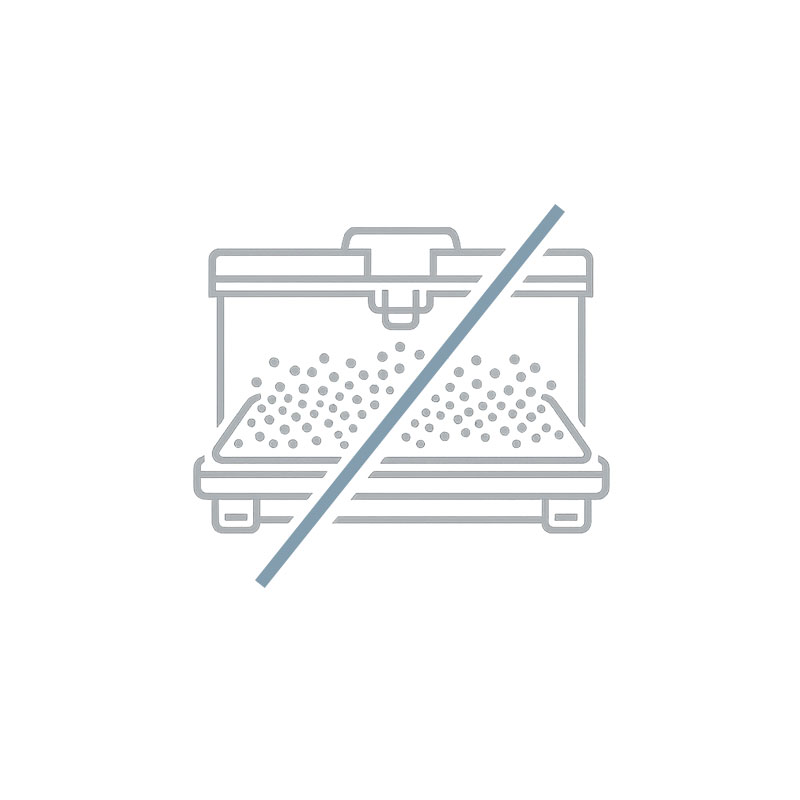
No powder bed to fill. Material is deposited only where needed. No depowdering means no airborne loose powder and improving safety and reducing protective requirements.
No Filament Strining
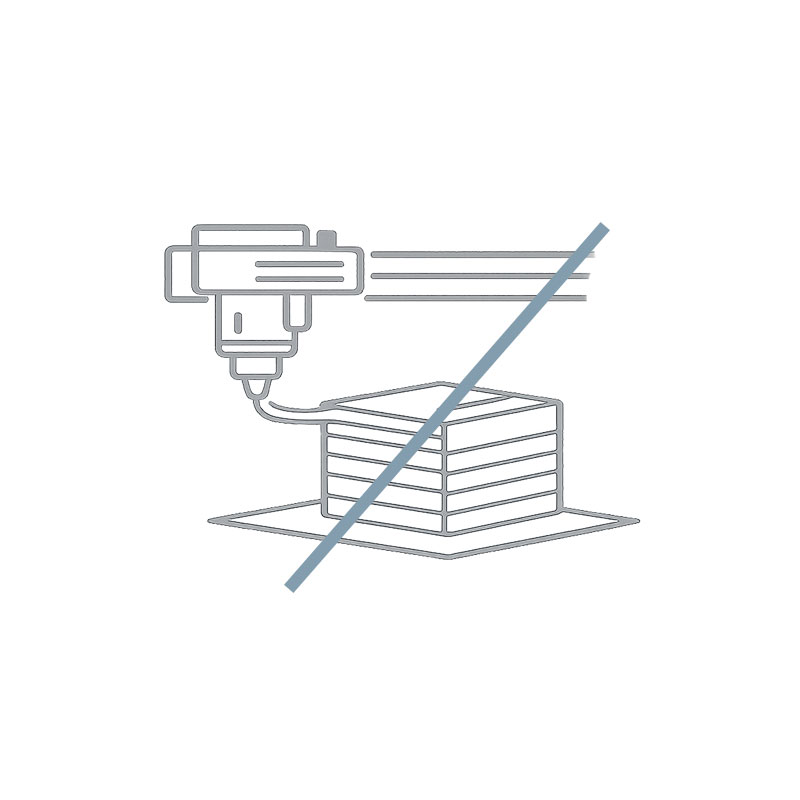
No filament-based extrusion. No stringing, unintended internal cavities, or weak interlayer bonding.
No VAT. No Slurry Tanks
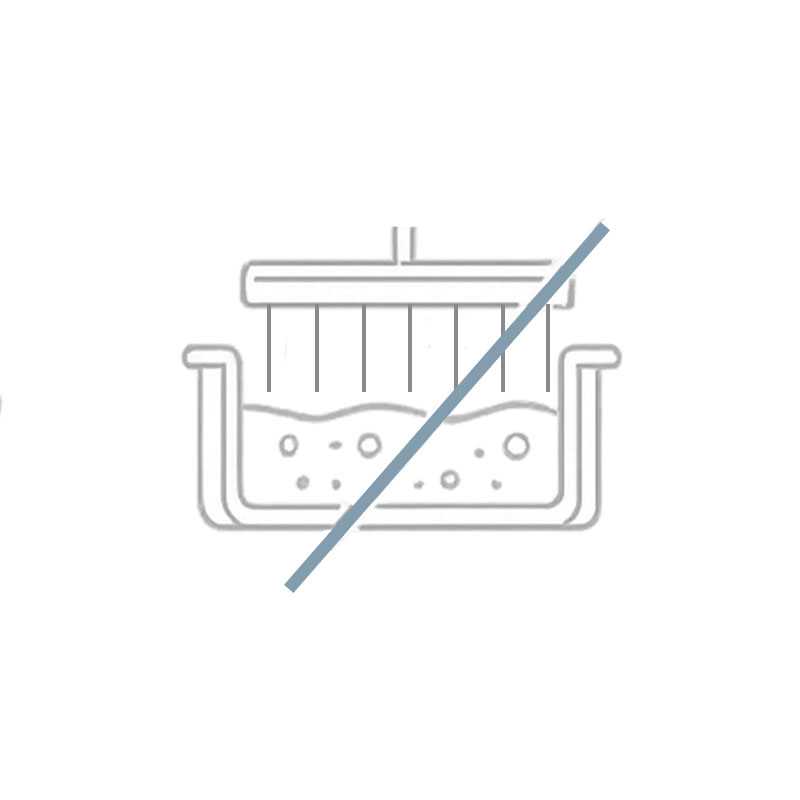
No slurry baths or resin vats. Clean material handling without fluid reservoirs or cross-contamination.
No Controlled Lighting
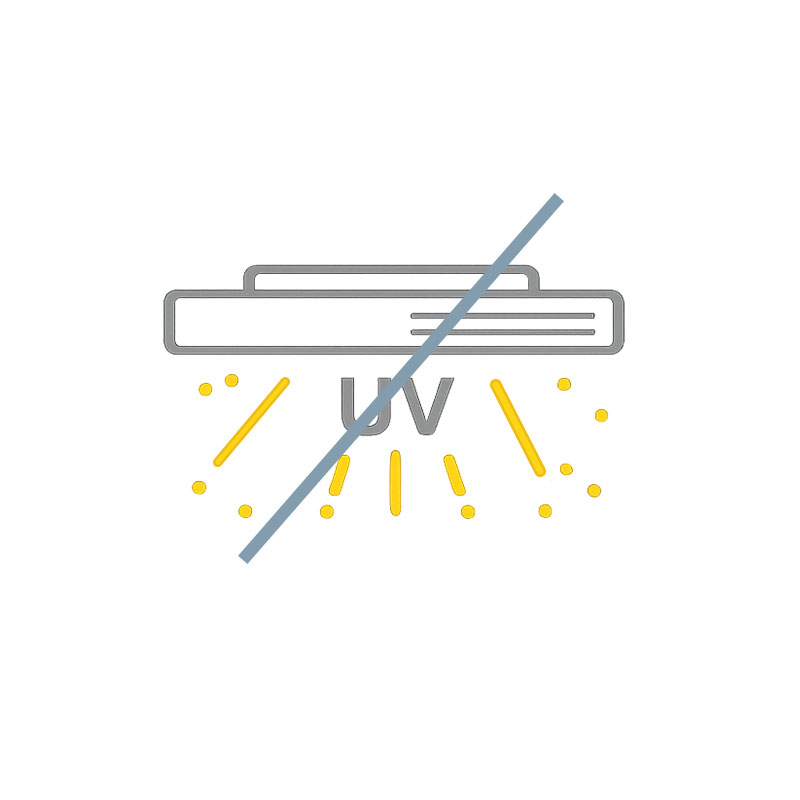
No light-controlled rooms required. Unlike UV- or photo-reactive processes, MMJ materials are not sensitive to ambient light.
No Inert Atmosphere
No inert gas chamber required for the build process.
No Solvent Debinding
No chemical debinding baths or hazardous solvents. Binder removal is performed thermally.
Tech Insights
Manufacturing defined at droplet scale.
Droplet-Based Build Principle
Functional integration at droplet resolution.
- Parts are built by overlapping droplets, forming lines and full layers.
- MMJ materials combine fine powder with a thermoplastic transport matrix.
- Deposited droplets fuse instantly and solidify into a stable green part.
- Higher powder loading means less binder to remove → faster debinding, lower shrink risk, and cleaner dimensional control.
- Green parts are debindered and sintered to achieve final material properties.
Resoultion
Quick Overview
- Resoultion 50 to 100 µm
- The droplet diameter (xy-plane) are variable and defined by the droplet diameter, ranges from 200 μm to over 1000 μm.
- The layer height » z-axis «, roughly equivalent to the droplet height, varies from 70 μm to 300 μm – approximately from the thickness of a human hair to roughly the diameter of a needle.
- Correlated to droplet diameter, the droplet volume spans from 0.5 nl » as small as a bacterial cell or even smaller than a speck of dust « up to more than 25.0 nl » approximately the volume needed to cover the cross-section of a human hair «.
- Wall thicknesses can range from a single droplet’s diameter up to 20 mm.
High-speed Recording of Droplet Deposition